Discipleship around the table
Discipleship happens around the table.
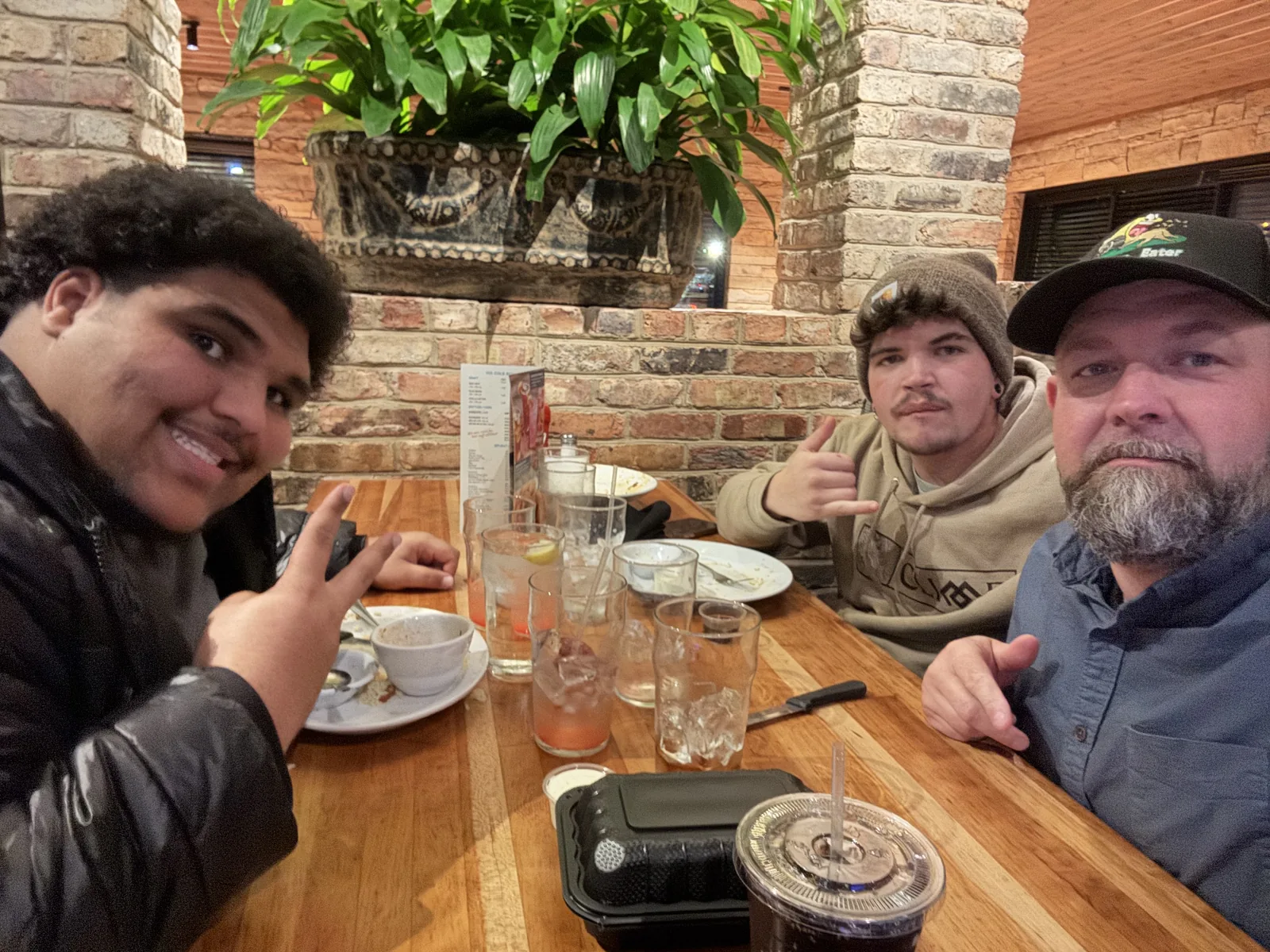
Jesus did not merely speak from a distance. He sat down with people. He ate with them. He lingered. If we want to follow him, we should take the table as seriously as he did.
Why meals matter
The table is where discipleship takes root
Over and over in the Gospels, the kingdom of God shows up where food is shared. Jesus taught crowds, but he formed friends at meals. Getting together, breaking bread, and lingering over a table is not a social extra. It is one of the main ways he made himself known — and one of the main ways we still learn to love one another.

Levi’s feast
When Jesus called Levi the tax collector, Levi did not host a lecture. He put a meal on the table and invited his friends — including people the religious leaders would not have chosen.
And Levi made him a great feast in his own house: and there was a great company of publicans and of others that sat down with them.
Luke 5:29
Feeding the five thousand
Even a miracle of provision was passed from hand to hand. Jesus blessed the loaves and gave them to his disciples to set before the people.
And when he had taken the five loaves and the two fishes, he looked up to heaven, and blessed, and brake the loaves, and gave them to his disciples to set before them; and the two fishes divided he among them all. And they did all eat, and were filled.
Mark 6:41–42
The Last Supper
On the night he was betrayed, Jesus gave his friends a meal to remember him by. The church has been coming back to that table ever since.
And he took bread, and gave thanks, and brake it, and gave unto them, saying, This is my body which is given for you: this do in remembrance of me.
Luke 22:19
The road to Emmaus
After the resurrection, two disciples walked with Jesus and did not know him — until they sat down to eat. He was recognized not first in a sermon, but in the breaking of bread.
And it came to pass, as he sat at meat with them, he took bread, and blessed it, and brake, and gave to them. And their eyes were opened, and they knew him; and he vanished out of their sight.
Luke 24:30–31
And they told what things were done in the way, and how he was known of them in breaking of bread.
Luke 24:35
Breakfast on the beach
After a long night of fishing on the Sea of Galilee, the risen Lord had a fire waiting, with fish and bread. His invitation was as ordinary — and as holy — as a meal.
As soon then as they were come to land, they saw a fire of coals there, and fish laid thereon, and bread. Jesus saith unto them, Come and dine. … Jesus then cometh, and taketh bread, and giveth them, and fish likewise.
John 21:9, 12–13
The first church
They broke bread from house to house
After Pentecost, the believers did not treat fellowship as an occasional extra. They built their common life around teaching, prayer, generosity, and meals — in the temple, and in one another’s homes.
And they continued stedfastly in the apostles’ doctrine and fellowship, and in breaking of bread, and in prayers. And fear came upon every soul: and many wonders and signs were done by the apostles. And all that believed were together, and had all things common; and sold their possessions and goods, and parted them to all men, as every man had need. And they, continuing daily with one accord in the temple, and breaking bread from house to house, did eat their meat with gladness and singleness of heart, praising God, and having favour with all the people. And the Lord added to the church daily such as should be saved.
Acts 2:42–47
The Lord added to the church not in spite of that ordinary closeness, but through it. Gladness and singleness of heart grew around tables, from house to house.

A small circle
Jesus invested in twelve — and in three

Crowds followed Jesus. He taught them, fed them, and had compassion on them. But he did not try to make disciples of everyone at once. He chose a few, and he stayed close to them.
And he ordained twelve, that they should be with him, and that he might send them forth to preach.
Mark 3:14
The first calling was not a platform. It was presence: that they should be with him. Among the twelve he drew Peter, James, and John still closer — at the raising of Jairus’s daughter, on the mountain of transfiguration, and in the garden of Gethsemane. The pattern is plain. Jesus invested deeply in a few, so that those few could later bless many.
Then and now
A larger room is not the same as a shared life
Many churches today gather in large auditoriums, and there is real good in that. A congregation can sing with one voice, hear the Scriptures opened with care, and remember that the body of Christ is bigger than any one household. Those things are gifts, and they should be received with gratitude.
But a row of seats facing a stage is not the same thing as a life shared. In a crowd it is easy to attend and still be unknown — to come and go without anyone asking how you are really doing, or who will bring a meal when trouble comes. Local fellowship can shrink even as the room grows. The danger is not that large gatherings exist. The danger is when they become a substitute for knowing one another.
Jesus shows another way: fewer people, closer in, doing life together. His presence does not require a large production. It requires people who will gather in his name.
For where two or three are gathered together in my name, there am I in the midst of them.
Matthew 18:20
The gift of a small circle
Small settings make disciples who are known
In a small group you can be known by name. You can open the Scriptures and ask an honest question. You can pray for a person, not a crowd. And you can carry one another when the week is heavy.
Bear ye one another’s burdens, and so fulfil the law of Christ.
Galatians 6:2
Small settings make room for support when someone is weary, for accountability that is gentle and true, and for the kind of friendship that lasts beyond a Sunday morning. This is how disciples are formed: not only by what we hear, but by the people who walk with us while we learn to obey it.
Jesus told his friends that the watching world would recognize his disciples by their love — love that is visible up close, around a table, in the ordinary work of doing life together.
A new commandment I give unto you, That ye love one another; as I have loved you, that ye also love one another. By this shall all men know that ye are my disciples, if ye have love one to another.
John 13:34–35
An invitation
Come and dine
You do not need a perfect plan to begin. Set a table. Break bread. Open the Word. Stay long enough to listen. The risen Lord still says, “Come and dine.” The table is one of the holiest places he has given us. Pull up a chair.
And let us consider one another to provoke unto love and to good works: not forsaking the assembling of ourselves together, as the manner of some is; but exhorting one another: and so much the more, as ye see the day approaching.
Hebrews 10:24–25
A study for men walking together
If you are looking for a way to start, here is a Bible study written for men in discipleship groups. It opens in a new tab.
Men’s Discipleship Bible Study